The acne is finally gone. But the scars it left behind are still there every morning when you look in the mirror. You have tried prescription creams, chemical peels, maybe even microneedling. Some things helped a little. Nothing fully worked.
Acne scars are structural damage. The skin lost collagen during the inflammatory process that caused the breakout, and surface treatments cannot rebuild what was lost at depth. That is the gap most scar treatments never fully bridge.
NeoGen Plasma Skin Regeneration takes a different approach. It is FDA-cleared and uses nitrogen plasma energy to stimulate collagen remodeling deep within the dermis, the structural layer where acne scar damage actually lives. This article explains exactly how NeoGen treats acne scars, which scar types respond best, what realistic improvement looks like, and what NeoGen honestly cannot fix.
How Does NeoGen Plasma Actually Treat Acne Scars?
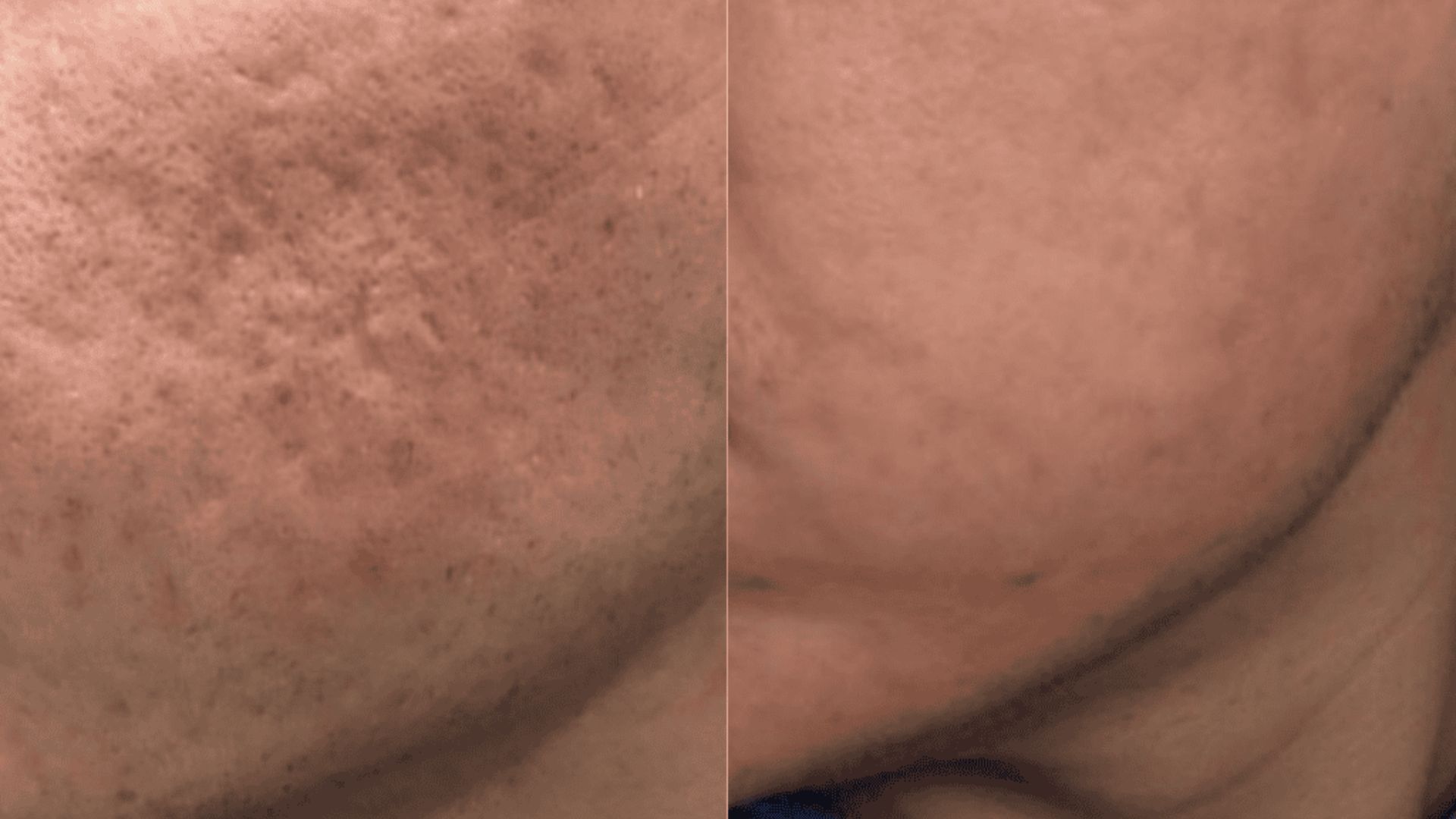
To understand why NeoGen works on acne scars, you need to understand what acne scars actually are at the structural level.
When severe acne causes inflammation deep in the skin, the healing process is disrupted. Instead of producing organized collagen to repair the damage, the skin produces disorganized or insufficient collagen. This leaves depressions, texture irregularities, and pigmentation changes behind. The surface looks scarred because the structure beneath it is genuinely different from surrounding healthy skin.
NeoGen converts inert nitrogen gas into plasma energy using an ultra-high frequency generator. This plasma delivers controlled thermal heat into the dermis without removing or ablating the outer skin layer. That outer layer stays intact throughout treatment and acts as a natural biological dressing. According to FDA clearance documentation, NeoGen PSR is cleared for skin resurfacing and regeneration, supporting its clinical use for scar remodeling applications.
The thermal signal activates fibroblast cells, the skin’s collagen-producing cells. These cells respond by increasing production of new structural collagen, which begins to fill scar depressions from within gradually over weeks and months. Elastin production also increases as part of the regeneration response. The improvement comes from the skin rebuilding its own structure, not from anything applied to the surface.
This is fundamentally different from surface treatments like chemical peels or topical retinoids, which only affect the outer layers of skin. NeoGen works at the depth where scar damage actually lives. For that reason, the improvement timeline is measured in months, not days, which is something every patient should understand before booking.
Which Types of Acne Scars Does NeoGen Treat Best?
Not all acne scars are the same, and not all of them respond equally well to NeoGen. Understanding which category your scarring falls into is the most important step before choosing any treatment. This is the section most competitor articles skip entirely, and skipping it leads to mismatched expectations.
Rolling Scars
Rolling scars are broad, shallow depressions with sloped edges that give the skin a wavy or uneven appearance. They form because fibrous tissue under the skin pulls the surface downward. NeoGen treats rolling scars well because the thermal stimulation rebuilds collagen throughout the broad scar base, gradually lifting and filling the depression from beneath. Multiple sessions typically produce progressive improvement in rolling scar depth and overall skin evenness. Patients with rolling scars generally see some of the most satisfying NeoGen outcomes.
Boxcar Scars
Boxcar scars are round or oval depressions with sharp, defined vertical edges. They range from shallow to moderately deep. Shallow to moderate boxcar scars respond well to NeoGen as the collagen remodeling fills in the base of the scar and softens the edge definition over time. Deep boxcar scars with sharply defined walls improve but may require more sessions or a combination approach to achieve maximum filling of the scar base.
Atrophic Shallow Scars and Textural Irregularities
This category includes general textural scarring, enlarged pores from prior acne inflammation, and widespread uneven skin surface. These respond very well to NeoGen because the treatment addresses the entire skin architecture rather than targeting individual scars. Patients with widespread textural damage often see the most noticeable overall improvement from NeoGen. The collagen rebuilding effect distributed across the full treatment area produces a meaningful change in overall skin quality.
Post-Inflammatory Hyperpigmentation and Red Marks
Post-inflammatory hyperpigmentation (PIH) and post-inflammatory erythema (PIE), the red or dark marks left after acne resolves, are not technically scars but are commonly treated alongside them. NeoGen’s thermal energy addresses both surface pigmentation and the underlying vascular changes that cause persistent redness. Improvement in PIH and PIE typically appears earlier in the results timeline than structural scar improvement, often visible within the first few weeks after treatment.
What NeoGen Cannot Fully Treat — Ice Pick Scars and Keloids
This is the honest section most providers leave out, and leaving it out does patients a disservice.
Ice pick scars are narrow, deep channels that extend into the dermis. Their depth and narrow diameter mean that collagen stimulation from NeoGen cannot fully fill them from the bottom up. NeoGen improves ice pick scars in terms of surrounding skin quality and surface texture, but it typically does not eliminate them. Patients with significant ice pick scarring may benefit from TCA Cross or subcision treatment targeting those specific scars, with NeoGen addressing the broader skin architecture around them.
Keloid and hypertrophic scars are raised, thickened areas of excess scar tissue. These are a contraindication for NeoGen treatment. Applying plasma energy to keloid tissue may stimulate further collagen production and worsen the scar. Any patient with a personal or family history of keloid scarring must discuss this directly with their provider before NeoGen is considered.
What Improvement Can Patients Realistically Expect From NeoGen for Acne Scars?
This is one of the most searched questions about NeoGen, and it is one that most providers answer too vaguely. Patients care less about collagen science and more about whether their scars will look noticeably better, moderately better, or dramatically better. The honest answer depends on scar type and severity.
For mild textural scarring, widespread surface irregularity, and PIH, most patients see significant improvement. The overall skin quality, tone, and texture change is clear and visible. These patients are typically the most satisfied because the treatment matches or exceeds their expectation.
For moderate rolling and boxcar scars, patients typically see meaningful and visible scar reduction. Scar depth decreases. Edges soften. Overall skin evenness improves. The improvement is real and noticeable but usually does not reach complete elimination. Most patients in this group describe their skin as looking substantially better rather than perfect.
For deep boxcar scars and significant scar coverage, NeoGen produces partial to meaningful improvement with appropriate sessions. The deeper the scar and the more extensive the coverage, the more sessions and the longer the timeline. Combination approaches may be discussed for the most challenging cases.
The honest boundary: NeoGen is not a scar elimination treatment for severe scarring. It is a structural improvement treatment. Patients who approach it as a way to rebuild their skin’s foundation rather than erase every scar consistently report better outcomes than patients who expect complete elimination.

Realistic Outcome Guide by Scar Type
| Scar Type | Typical Improvement | Sessions Usually Needed | Timeline to See Results |
| Mild textural scarring, PIH | Significant — most patients see clear surface and tone improvement | 1 to 2 | 4 to 8 weeks |
| Rolling scars (shallow to moderate) | Moderate to significant — scar depth visibly reduced, surface smoother | 2 to 3 | 8 to 16 weeks |
| Boxcar scars (shallow to moderate) | Moderate — edges soften, base fills progressively | 2 to 3 | 8 to 20 weeks |
| Boxcar scars (deep) | Partial improvement — significant sessions required, combination may help | 3 or more | 3 to 6 months |
| Ice pick scars | Modest surface improvement — combination with TCA Cross often recommended | Not primary treatment | Variable |
| Keloid or hypertrophic scars | Not appropriate — NeoGen is contraindicated for raised scar tissue | N/A | N/A |
How Does NeoGen Compare to Other Acne Scar Treatments?
Patients researching acne scar treatment in 2026 are typically weighing NeoGen against CO2 laser, microneedling, RF microneedling, and chemical peels. Each has a place. The right choice depends on scar type, skin tone, available downtime, and treatment goals.
| Treatment | Mechanism | Best Scar Types | Downtime | Dark Skin Safety | Sessions |
| NeoGen PSR | Nitrogen plasma rebuilds collagen and elastin in dermis | Rolling, boxcar, textural, PIH | 3 to 10 days | Suitable with proper planning | 1 to 3 |
| CO2 Ablative Laser | Removes outer skin layers to trigger regrowth | Rolling, boxcar, surface texture | 10 to 14 days | Higher risk for types IV to VI | 1 to 2 |
| Microneedling | Micro-injuries trigger shallow collagen repair | Mild rolling, surface texture | 1 to 3 days | Yes | 3 to 6 |
| RF Microneedling | Micro-injuries plus radiofrequency heat | Rolling, boxcar, mild laxity | 3 to 5 days | Yes | 3 to 4 |
| Chemical Peels | Exfoliates surface layers chemically | PIH, surface texture, mild scarring | 3 to 7 days | Moderate risk | 3 to 6 |
The honest summary: NeoGen is not always the right first choice for every scar type. For patients with only ice pick scars, TCA Cross or subcision may be more appropriate as the primary treatment. For patients with widespread rolling and boxcar scars on medium to deeper skin tones, NeoGen’s safety profile makes it a strong preference over CO2 laser. For patients with mild textural scarring and very limited downtime availability, microneedling may be a reasonable starting point.
NeoGen’s distinct advantage is that it addresses the full skin architecture, treating multiple scar types, pigmentation concerns, and texture simultaneously in a single session. According to the American Society of Plastic Surgeons, non-surgical skin regeneration procedures continue to grow as patients seek comprehensive improvement with manageable recovery. NeoGen sits at the intersection of efficacy and recovery manageability for the acne scar patient population.
Why Acne Scar Treatment Requires Special Consideration for Atlanta’s Diverse Skin Population
Acne scarring affects patients of all skin tones, but the treatment approach cannot be the same across all Fitzpatrick types. In Atlanta, where the patient population is genuinely diverse, this distinction matters in a way it does not at many other practices.
Most laser scar treatments, including CO2 and fractional lasers, rely on selective photothermolysis, a process that uses light energy absorbed by specific chromophores in the skin. Because melanin is a chromophore, these treatments carry elevated risk of post-inflammatory hyperpigmentation in skin types IV through VI. For a patient whose skin already carries PIH from acne, adding more PIH risk through treatment is a real clinical concern, not just a theoretical one.
NeoGen’s nitrogen plasma mechanism does not rely on chromophore absorption. It does not seek out melanin. The thermal energy is delivered into the dermis based on tissue response rather than pigment presence. This makes NeoGen suitable across all Fitzpatrick skin types when treatment planning and energy selection are performed appropriately. That distinction is the reason NeoGen has become a preferred choice for many acne scar patients in Atlanta with medium to deep skin tones who have been told by other providers that CO2 laser is not appropriate for them.
However, important clinical nuances apply regardless of skin tone. Patients prone to post-inflammatory hyperpigmentation should have their skin assessed with VISIA 3D imaging before treatment so that energy level selection and post-care protocol can be tailored to their specific pigmentation history. Active inflammation, including active breakouts in the treatment zone, should be resolved or well-controlled before any NeoGen session is scheduled.
BlueDivine Aesthetics in Atlanta has built its 13-year clinical reputation on multiethnic skin care expertise. Every NeoGen patient at BlueDivine receives a VISIA-based assessment that accounts for skin tone, pigmentation patterns, and scar distribution before any treatment is planned. According to Google Business, the majority of patients searching for med spa treatments in Atlanta actively look for providers who specialize in their specific skin tone. BlueDivine’s multiethnic focus directly addresses this need.
How Many NeoGen Sessions Do Acne Scars Actually Require?
Acne scars typically require more NeoGen sessions than anti-aging concerns like wrinkles or laxity. Scar tissue represents a deeper and more organized collagen deficit than age-related thinning, and filling that deficit takes more regeneration cycles.
For mild textural scarring, widespread pore irregularity, and light PIH, one to two sessions often produce meaningful improvement. The surface quality change is significant and the overall skin architecture improves noticeably.
For moderate rolling and boxcar scarring, two to three sessions spaced approximately six to eight weeks apart typically produce the strongest results. Each session adds another round of collagen stimulation. The cumulative effect builds progressively greater scar filling and surface improvement.
For significant scar coverage or deep boxcar scars across a wide area, three sessions may be recommended. The provider’s recommendation is always based on a VISIA assessment of the specific scar distribution and skin condition rather than a standard package.
Results timeline for acne scars: surface texture improvement is typically visible within one to two weeks as the skin completes its renewal phase. Visible scar filling and structural improvement becomes noticeable between weeks four and twelve as new collagen builds in the scar base. The fullest improvement is typically seen at month three to six. According to Future Market Insights, the global plasma skin regeneration treatment market continues to expand as clinical evidence supporting multi-session collagen stimulation protocols for acne scarring accumulates across provider networks internationally.
Who Should Delay or Avoid NeoGen Treatment for Acne Scars?
Knowing who is not the right candidate is as important as knowing who is. This section exists to protect patients, not discourage them.
Active acne in the treatment zone requires stabilization before NeoGen is appropriate. The thermal energy applied to actively inflamed skin can produce unpredictable responses. Patients whose acne is still cycling through active breakouts need a skin management plan that controls the acne before structural scar treatment begins. BlueDivine’s consultation process identifies this as a priority before any session is scheduled.
Active skin infections, including herpes simplex outbreaks, eczema flares, or other infections in or near the treatment area, are contraindications. Treatment must be postponed until the infection resolves fully. Proceeding while an infection is present risks spreading it across the treatment zone.
Keloid or hypertrophic scarring history is a contraindication. Patients with a personal or family history of raised scar formation should not receive NeoGen on or near areas where keloid formation has occurred. The collagen stimulation that helps atrophic scars may worsen keloid tissue.
Pregnancy is a contraindication due to limited safety data in this population. Patients who are pregnant or planning to become pregnant in the near term should delay NeoGen treatment.
Certain medications require evaluation before treatment. Photosensitizing medications, immunosuppressants, and blood thinners may affect how the skin responds to NeoGen or how it heals afterward. These should be disclosed during the consultation so the provider can assess timing appropriately.
Patients with unrealistic expectations about outcome are not good candidates at that point in the process. Someone expecting NeoGen to completely eliminate severe deep scarring in a single session is not set up for a satisfying experience. The VISIA consultation process at BlueDivine is specifically designed to align expectations with realistic outcomes before any treatment is booked.
What Surprises Acne Scar Patients Most About NeoGen?
Clinical insight is what separates a trusted resource from an informational one. These are the observations that come from treating acne scar patients consistently over time, and they reflect what patients rarely read about before their first session.
The first surprise is that texture improvement appears before scar filling does. Most patients expect to see their deepest scars improve first. What actually happens is that the overall skin quality changes noticeably within the first two weeks as the surface renewal completes, while the structural scar filling continues gradually over months. Patients who understand this sequence stay patient and satisfied. Patients who do not tend to underestimate the treatment at the six-week mark.
The second surprise is how much the surrounding skin quality matters to the overall appearance. Many patients focus entirely on the depth of individual scars. But the texture, tone, and evenness of the skin surrounding the scars plays an enormous role in how visible those scars look. When NeoGen improves the overall skin architecture, scars that are structurally the same depth often appear less noticeable simply because the surrounding skin looks healthier. This is an outcome patients consistently find more impactful than they anticipated.
The third surprise is the emotional response. Acne scarring carries a psychological weight that goes beyond appearance. Patients who have carried visible scarring for years, who have avoided certain lighting or angles in photos, or who have spent significant money on treatments that underdelivered, often experience a level of relief when they see genuine structural improvement that goes beyond what they expected from a clinical treatment. At BlueDivine Aesthetics, this emotional dimension of scar treatment is acknowledged during consultation rather than treated as a secondary concern.
The fourth surprise is that managing active acne before treatment matters more than most patients expect. Patients who arrive with scars from old acne but active breakouts still occurring do not get the same results as patients whose skin is stable. The skin cannot fully regenerate in an environment that is still creating new damage. Stabilizing the acne before treating the scars is not a delay. It is part of the treatment.
Pros and Cons of NeoGen Plasma for Acne Scars
| Pros | Cons |
| Rebuilds scar tissue at the structural level by stimulating new collagen production in the dermis. This addresses the root cause of atrophic scars rather than improving surface appearance only. | Does not fully eliminate deep ice pick scars. These narrow, deep scars typically require additional treatments such as TCA Cross or subcision before or alongside NeoGen for maximum improvement. |
| Suitable across Fitzpatrick skin types I through VI when treatment planning and energy selection are performed appropriately. This makes it accessible to patients who are not candidates for CO2 or fractional laser treatments. | Results for acne scars take longer to appear than results for anti-aging concerns. Collagen filling of scar depth continues for months, meaning patients need to allow a full timeline before assessing outcome. |
| Treats multiple scar types and skin concerns in one session. Rolling scars, boxcar scars, textural irregularities, and post-inflammatory hyperpigmentation all respond in the same treatment. | Multiple sessions are typically required for significant acne scarring. One session produces improvement, but patients with moderate to severe scarring usually need 2 to 3 sessions spaced appropriately. |
| Shorter downtime than ablative CO2 laser. The outer skin layer stays intact throughout recovery, meaning no raw skin, no weeping, and a more predictable healing process of 3 to 10 days. | Not suitable for active acne breakouts in the treatment zone, keloid scarring, hypertrophic scars, active infections, or pregnancy. A thorough consultation is essential before any NeoGen session is planned. |
Frequently Asked Questions
Does NeoGen plasma actually work for acne scars?
Yes, NeoGen produces measurable improvement in acne scars by stimulating collagen remodeling deep within the dermis where scar damage exists. It works best on rolling scars, boxcar scars, atrophic textural scarring, and post-inflammatory hyperpigmentation. Results build progressively over weeks and months. It does not fully eliminate deep ice pick scars, and keloid scars are a contraindication. A VISIA assessment before treatment helps determine realistic outcomes for each patient’s specific scarring and skin condition.
Can NeoGen remove acne scars permanently?
NeoGen rebuilds the collagen structure beneath acne scars, producing lasting improvement that continues developing for up to two years. For many scar types, particularly rolling, boxcar, and textural scarring, the structural improvement is significant and long-lasting. It is more accurate to describe it as meaningful and durable improvement rather than permanent removal. Very deep or severe scarring typically improves substantially but may not reach complete elimination. Maintenance sessions and consistent sun protection help sustain results.
Is NeoGen plasma safe for acne scars on darker skin tones?
NeoGen is suitable across all Fitzpatrick skin types when treatment planning and energy selection are performed appropriately. Unlike CO2 and fractional lasers that use chromophore-targeting mechanisms carrying elevated risk for darker skin, NeoGen’s nitrogen plasma mechanism does not target melanin. Patients with darker tones or a history of post-inflammatory hyperpigmentation should have their skin assessed with VISIA before treatment so the protocol can be tailored to their specific pigmentation history and scar distribution.
Is NeoGen worth it for acne scars?
For patients with rolling scars, boxcar scars, textural scarring, or widespread PIH, NeoGen produces meaningful structural improvement that surface treatments cannot achieve. It addresses the collagen deficit that causes atrophic scarring rather than treating the surface only. For patients who have tried multiple surface treatments without satisfactory results, NeoGen represents a different category of treatment. The honest limitation is that deep ice pick scars and keloid scars are not well-suited to NeoGen, and a consultation determines whether the treatment is appropriate for each case.
How does NeoGen compare to microneedling for acne scars?
Microneedling creates micro-injuries at the surface to trigger a shallow collagen repair response. It works well for mild textural scarring with minimal downtime across multiple sessions. NeoGen delivers thermal energy into the dermis, stimulating deeper and more significant collagen remodeling. It addresses moderate to severe scarring more effectively and treats multiple concerns simultaneously. NeoGen typically requires fewer total sessions than microneedling for comparable structural improvement, though per-session downtime runs longer at 3 to 10 days.
What types of acne scars does NeoGen not treat well?
Ice pick scars are the most significant limitation. These deep, narrow channel scars do not fill completely from NeoGen’s collagen stimulation alone. TCA Cross or subcision is often recommended for ice pick scars before or alongside NeoGen. Keloid and hypertrophic scars are a contraindication. NeoGen should not be used on raised scar tissue as the collagen stimulation may worsen keloids. Deeply tethered rolling scars may also benefit from subcision to release the fibrous anchor before NeoGen addresses the surrounding architecture.
How BlueDivine Approaches Acne Scar Treatment in Atlanta
BlueDivine Aesthetics at 107 West Paces Ferry Road in Buckhead has used NeoGen PSR as a flagship treatment for over 13 years. Acne scar treatment at BlueDivine begins with a VISIA 3D Skin Analysis that maps scar type, distribution, pigmentation patterns, and underlying skin health before any protocol is designed.
Founder Kalen Wheeler’s board-certified expertise and long-standing focus on multiethnic skin care means every NeoGen scar treatment accounts for skin tone, PIH history, and scar complexity in the energy level and session planning. A complimentary virtual consultation is available for anyone who wants to discuss their acne scarring and whether NeoGen is the right approach before booking in person.
Ready to explore NeoGen plasma for your acne scars?
Book a VISIA 3D Skin Analysis or a complimentary virtual consultation at BlueDivine Aesthetics, Buckhead Atlanta. Visit bluedivine.zenoti.com/webstoreNew/services to schedule.