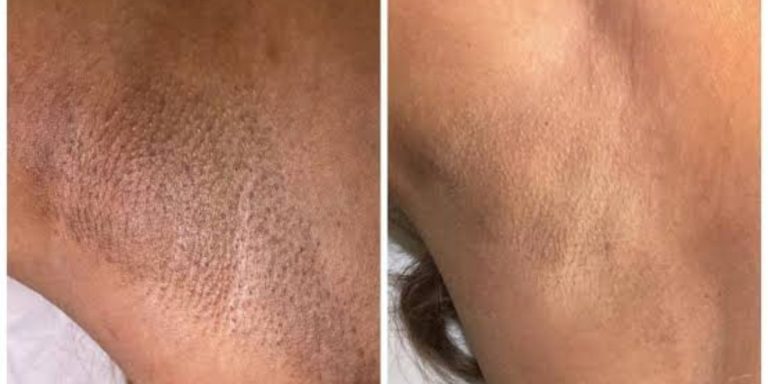
If you have medium to deep skin and have been researching laser hair removal in Atlanta, you have probably run into some version of the same answer: it is complicated, it costs more, or it might not work for you. Some providers have turned patients away. Others charge extra for darker skin tone protocols. Some use devices that carry real risk for Fitzpatrick IV through VI and proceed anyway.
In a city as diverse as Atlanta, this is not a fringe concern. It is the mainstream concern. The honest answer is that laser hair removal is safe and effective for darker skin tones when the right device is used with appropriate settings and experience. The challenge has always been technology, not skin tone.
One important note before going further: skin tone is not the only factor in laser hair removal outcomes. Hair color and thickness also matter. The laser targets melanin in the hair follicle, so coarse, dark hair responds strongly while very light, fine, grey, or red hair responds less regardless of skin tone. This guide focuses on skin tone safety because it is the most misunderstood part of the equation for Atlanta patients.
Splendor X is an FDA-cleared dual-wavelength laser that combines Alexandrite 755nm and Nd:YAG 1064nm wavelengths, allowing providers to treat a broad range of Fitzpatrick skin types using one platform. It is the device used at BlueDivine Aesthetics in Buckhead, Atlanta for all patients at the same price with no surcharge. This guide explains exactly why darker skin requires careful device selection, how to evaluate providers, and what real results look like for Fitzpatrick IV through VI patients.
Why Is Laser Hair Removal More Complicated for Darker Skin Tones?
Laser hair removal uses a process called selective photothermolysis. The laser emits energy at a specific wavelength that is absorbed by melanin inside the hair follicle. The melanin converts that energy to heat, which damages the follicle and reduces its ability to produce hair.
The challenge is that melanin exists in two places: inside the hair follicle where the laser needs to go, and in the epidermis where it does not. For patients with lighter skin tones, the melanin concentration in the follicle is much higher than in the surrounding skin. The laser can target the follicle with relatively less competing absorption at the surface.
For patients with medium to deep skin tones, the epidermis contains more melanin. This means it absorbs more laser energy before that energy reaches the follicle. With shorter-wavelength devices, this surface absorption can generate enough heat to cause epidermal damage, burns, or post-inflammatory hyperpigmentation in the treated area.
This is a technology problem, not a skin problem. Patients who have been told they cannot be treated are not untreatable. They need a device where the wavelength is absorbed less strongly by epidermal melanin, allowing more energy to reach the follicle at depth while reducing the risk of surface overheating.
| BLUEDIVINE AESTHETICS
Many patients self-identify their Fitzpatrick type before a consultation, but self-assessment is often inaccurate. A patient with naturally light skin who tans easily and quickly may function as a higher Fitzpatrick type when recently exposed to Atlanta’s year-round sun. A patient who appears to be type III at first glance may tan so readily that their effective treatment type is IV. This matters because energy settings that are safe for type III can carry elevated risk for an undetected type IV. At BlueDivine Aesthetics, every patient’s skin is assessed before any settings are selected, taking into account current tone, recent sun exposure, and tanning history rather than the patient’s own estimate. |
What Is the Fitzpatrick Scale and Why Does It Matter for Laser Safety?
The Fitzpatrick scale is a clinical classification system that categorizes skin based on melanin concentration and response to ultraviolet light. It runs from Type I (very fair, always burns) to Type VI (deepest complexion, never burns). Laser providers use it to determine appropriate device settings for each patient.
Fitzpatrick Scale and Laser Hair Removal Device Selection
| Fitzpatrick Type | Typical Skin Characteristics | Sun Response | Laser Consideration |
| Type I | Very fair, often freckled | Always burns, never tans | Standard protocols, most devices appropriate |
| Type II | Fair skin, light hair | Burns easily, tans minimally | Standard protocols |
| Type III | Medium skin, sometimes light brown | Burns moderately, tans gradually | Most devices appropriate with standard settings |
| Type IV | Olive to light brown | Burns minimally, tans easily | Careful device selection required; Nd:YAG or dual-wavelength preferred |
| Type V | Brown skin | Rarely burns, tans easily | Nd:YAG or dual-wavelength with appropriate settings strongly recommended |
| Type VI | Deep brown to black | Never burns | Nd:YAG 1064nm or dual-wavelength required for appropriate treatment |
The scale is a useful guide but not a rigid boundary. Device selection and energy calibration matter as much as the Fitzpatrick classification. A well-calibrated Nd:YAG session at appropriate settings for a type VI patient can produce safe results. An aggressive setting on an Alexandrite device for a type IV patient can produce adverse outcomes. The device matters, and the settings matter.
Which Laser Technology Is Most Appropriate for Dark Skin Tones in Atlanta?
Not all laser hair removal devices are the same. The technology difference matters significantly for darker skin tones and understanding it helps patients make informed decisions before they book anywhere.
Laser Technology Comparison for Darker Skin Tones
| Technology | Wavelength | Melanin Absorption Level | Fitzpatrick Suitability | Dark Skin Safety |
| IPL (not a true laser) | Broad spectrum mixed | High surface absorption — broad wavelength targets multiple chromophores | I to III only | Not recommended for types IV to VI |
| Alexandrite Laser | 755nm | High melanin absorption — effective but narrow safety margin for darker skin | I to III, selected IV with careful calibration | Requires careful patient selection for type IV; higher risk for V to VI |
| Diode Laser | 810nm | Moderate melanin absorption — more versatile than Alexandrite | I to IV, cautiously V | More caution needed for types V to VI without advanced cooling |
| Nd:YAG Laser | 1064nm | Lower epidermal melanin absorption — more energy reaches follicle at depth | I to VI | Widely accepted as appropriate for all Fitzpatrick types with proper settings |
| Splendor X (dual-wavelength) | 755nm + 1064nm simultaneously | Both wavelengths combined — Nd:YAG handles dark skin safety while 755nm adds follicle precision | I to VI | Treats all Fitzpatrick types with appropriate protocol calibration |
An important clarification about Alexandrite: it is not inherently unsafe. Experienced providers can use it successfully in selected Fitzpatrick IV patients with careful calibration and appropriate cooling. The issue for darker skin tones is that its higher melanin absorption creates a narrower safety margin, meaning the gap between effective treatment and overheating is smaller. For types V and VI, this margin narrows further, which is why the Nd:YAG 1064nm wavelength is more commonly recommended for those patients.
The Nd:YAG 1064nm is widely accepted in clinical practice as appropriate for darker skin tones because its longer wavelength is absorbed less strongly by epidermal melanin. More energy reaches the follicle at depth while the risk of surface overheating is reduced. It is not risk-free, but the safety profile for darker skin tones is well established with appropriate settings.
Splendor X combines both wavelengths simultaneously in one platform. The 755nm Alexandrite contributes follicle precision where it is appropriate. The 1064nm Nd:YAG handles the deeper penetration and dark skin safety profile. Running both in a single pass means broader coverage and the maintained safety advantage of the 1064nm wavelength for darker tones. According to FDA clearance documentation, both Alexandrite 755nm and Nd:YAG 1064nm wavelengths are cleared for laser hair reduction applications.
What Questions Should You Ask Before Booking Laser Hair Removal for Dark Skin?
Patients with darker skin tones deserve specific answers before committing to any provider in Atlanta. These questions help separate appropriate providers from those who are not equipped for this patient population.
Ask: What device do you use and what is its wavelength? The answer should include 1064nm Nd:YAG or a dual-wavelength system that includes 1064nm. If the provider mentions only IPL or Alexandrite without explaining how it is calibrated for darker skin, ask more questions before proceeding.
Ask: Have you treated my Fitzpatrick type before? Experience with types IV through VI specifically matters. A provider with limited experience in this population may not calibrate settings conservatively enough even with an appropriate device.
Ask: Do you charge differently for darker skin tones? Some providers charge a premium for additional protocol time, special settings, or extra sessions that they consider necessary for darker skin. At BlueDivine Aesthetics, every patient is treated with Splendor X at the same series package pricing regardless of Fitzpatrick type.
Ask: Will you do a test patch before the full treatment? For types IV through VI, a test patch in a small area confirms how the skin responds to the selected energy settings before the provider proceeds with the full treatment zone.
Ask: What is your protocol if post-inflammatory hyperpigmentation occurs? A provider with real experience treating darker skin tones will have a clear answer. This includes topical treatment recommendations and session timing adjustments. A provider who cannot answer this clearly has limited practical experience with this population.
How Do Ingrown Hairs and Hyperpigmentation From Waxing Affect the Laser Process?
Many patients with medium to deep skin tones arrive at a laser consultation after years of waxing, threading, or shaving. These methods frequently cause chronic ingrown hairs, particularly in the bikini area, underarms, and legs. Each ingrown hair triggers inflammation. Each round of inflammation leaves post-inflammatory hyperpigmentation behind.
Over time, this cycle creates a landscape of existing PIH across the treatment zones before laser hair removal has even begun. This matters for treatment planning in two ways. First, active inflammation or infected ingrown hairs in a treatment zone require assessment before proceeding. Second, existing PIH changes the melanin distribution in the area, which the provider factors into energy settings.
Laser hair removal, when done correctly with appropriate technology, resolves the ingrown and PIH cycle over time rather than making it worse. By reducing hair density progressively across sessions, the laser removes the source of the ingrown hair problem. No hair means no ingrown. No ingrown means no ongoing inflammation. No ongoing inflammation means existing PIH fades without new spots forming.
Patients who have struggled with chronic ingrown hyperpigmentation in the bikini area and underarms often find that their skin condition improves significantly over the treatment series, not just the hair density. At BlueDivine Aesthetics, patients with existing ingrown hair and PIH patterns receive a pre-treatment assessment that maps the current skin condition before energy levels are selected. For more on how series packages are structured, read our Laser Hair Removal Cost Atlanta guide on the BlueDivine blog.
Who Should Delay or Avoid Laser Hair Removal?
Even patients with the right skin tone, hair color, and provider should delay treatment in certain situations. Knowing when to wait protects outcomes and patient safety.
Recent tanning or significant sun exposure in the treatment zone should be resolved before proceeding. Tanned skin raises the effective Fitzpatrick type, which changes the safety parameters of any session. Patients with recent sun exposure or active tan lines should wait until the tan has fully faded before booking.
Active skin infections, open wounds, or active herpes simplex outbreaks in or near the treatment zone are contraindications. Treatment must be postponed until these conditions resolve fully.
Certain photosensitizing medications, including specific antibiotics, retinoids at high doses, and some acne medications, can increase skin sensitivity to laser energy. Patients taking these medications should disclose them at consultation. The provider will advise whether a waiting period is needed before treatment begins.
Pregnancy is a contraindication. Patients who are pregnant should delay laser hair removal until after pregnancy and breastfeeding have concluded.
Tattoos within the intended treatment zone require careful consideration. Laser energy targeted near tattooed skin can affect the tattoo pigment and cause unintended reactions. The provider will assess whether the treatment zone can be safely approached without affecting any existing tattoos.
Patients with very light, fine, grey, or red hair in the treatment area, even with darker skin tones, should discuss realistic expectations at consultation. The laser targets melanin in the hair follicle. Minimal follicle pigment means limited energy absorption regardless of device quality. Hair color and thickness are as important as skin tone when assessing laser hair removal candidacy.
What Results Can Dark Skin Patients Realistically Expect From Laser Hair Removal in Atlanta?
Patients with darker skin tones and coarse hair often see strong results from laser hair removal with appropriate technology. Coarse, dense hair with high melanin concentration in the follicle absorbs Nd:YAG energy effectively. The follicle target is suited to this wavelength and the reduction per session is often significant.
Sessions 1 and 2: Treated hairs shed over 1 to 3 weeks following each session. The treated area appears thinner in patches. Some patients with coarser hair see more noticeable early shedding.
Sessions 3 to 5: Significant reduction in hair density becomes visible. Regrowth is finer and slower. The skin in the treated zone typically shows improved texture, particularly in areas where chronic ingrown hairs were present.
Sessions 6 to 8: Most patients experience long-term permanent hair reduction after completing the series. Remaining hair is typically fine, sparse, and slow-growing. The improvement in skin quality in previously ingrown-prone areas is often a welcome additional outcome.
Session spacing matters. Some patients with darker skin tones have sessions spaced slightly further apart if the provider is calibrating energy conservatively for safety. A longer series with properly calibrated energy produces a better outcome than a faster series that compromises the safety margin.
According to the American Society of Plastic Surgeons, laser hair removal consistently ranks among the most performed non-surgical aesthetic procedures nationally, reflecting established patient satisfaction with long-term permanent hair reduction outcomes across all skin tones when appropriate technology and protocols are used.
Pros and Cons of Laser Hair Removal for Dark Skin in Atlanta
| Pros for Dark Skin Patients | Honest Limitations |
| Splendor X combines Alexandrite 755nm and Nd:YAG 1064nm in one device, allowing providers to treat a broad range of Fitzpatrick skin types using one platform without protocol changes or additional charges. | Not all providers have appropriate technology for darker skin tones. Patients must confirm the specific device and wavelength before booking anywhere. Asking is not optional. |
| Laser hair removal resolves the chronic ingrown hair and PIH cycle caused by years of waxing in darker skin tones. Results improve overall skin quality over the treatment series, not just hair density. | More conservative energy settings may be needed for some patients with darker skin tones, which can extend the session count slightly. A longer series with appropriate calibration produces better outcomes than a rushed series. |
| No surcharge for skin tone at BlueDivine Aesthetics in Atlanta. All Fitzpatrick types are treated with the same Splendor X technology at the same series package pricing. | Existing PIH or active ingrown hair infections in the treatment zone require assessment before treatment begins. Some patients need to allow existing conditions to stabilize first. |
| Coarse, dense hair common in many patients with darker skin tones responds strongly to Nd:YAG energy. The follicle target is well-suited to this wavelength and reduction per session is often significant. | Very light, fine, grey, or red hair even in darker skin patients does not respond as well because the laser targets melanin in the follicle. Hair color and thickness matter alongside skin tone. |
Frequently Asked Questions
Is laser hair removal safe for dark skin in Atlanta?
Yes, when performed with the correct device and appropriate protocols. The Nd:YAG 1064nm wavelength is widely accepted as appropriate for Fitzpatrick IV through VI because its longer wavelength is absorbed less strongly by epidermal melanin, allowing more energy to reach the follicle while reducing surface overheating risk. Splendor X combines 755nm Alexandrite and 1064nm Nd:YAG in one platform, treating all skin tones with appropriate calibration. BlueDivine Aesthetics in Buckhead uses Splendor X for all patients at the same price.
What is the best laser for dark skin tone hair removal?
The Nd:YAG 1064nm laser is widely accepted in clinical practice for Fitzpatrick IV through VI. Its longer wavelength is absorbed less strongly by epidermal melanin, allowing deeper follicle targeting with reduced surface overheating risk. Splendor X, used at BlueDivine Aesthetics in Atlanta, combines 755nm Alexandrite and 1064nm Nd:YAG simultaneously, offering follicle precision and dark skin safety profile in a single treatment pass with appropriate protocol calibration.
Will laser hair removal cause burns or hyperpigmentation on dark skin?
With inappropriate devices or poorly calibrated settings, adverse outcomes including burns and post-inflammatory hyperpigmentation can occur in darker skin tones. The risk is significantly reduced when appropriate technology, conservative settings, and experienced providers are used. Splendor X’s 1064nm Nd:YAG component provides a more appropriate safety profile for darker skin than shorter-wavelength alternatives. A test patch before full treatment helps confirm the skin’s response before proceeding to the full treatment zone.
Does BlueDivine charge more for laser hair removal on darker skin tones?
No. BlueDivine Aesthetics treats all Fitzpatrick skin types with Splendor X at the same series package pricing. There is no surcharge, special protocol fee, or price difference for darker skin tones. Every patient receives the same device and the same level of clinical care regardless of skin tone. Cherry Financing is available for all packages. View current pricing and book at the Zenoti booking page.
How many sessions does laser hair removal take for dark skin?
Most patients need 6 to 8 sessions, the same general range as other patients. Some sessions may be spaced slightly further apart with conservative energy calibration for safety. Coarse hair common in many patients with deeper skin tones typically responds well to Nd:YAG energy because the high-melanin follicle absorbs this wavelength effectively. Hair color and thickness also affect outcomes. Very light or fine hair reduces effectiveness regardless of skin tone.
Can I get laser hair removal if I have existing ingrown hairs and hyperpigmentation?
In most cases, yes. A pre-treatment assessment determines whether active infections in the treatment zone need to resolve first. Existing PIH does not prevent treatment but informs energy calibration. Over the treatment series, laser hair removal typically resolves the chronic ingrown and PIH cycle by eliminating the hair that causes it. Many patients with darker skin tones find their skin quality improves significantly across the series because the ingrown-inflammation-PIH pattern has a structural solution for the first time.
Laser Hair Removal for All Skin Tones at BlueDivine Aesthetics in Atlanta
BlueDivine Aesthetics at 107 West Paces Ferry Road in Buckhead has specialized in laser hair removal for all skin tones for over 13 years. Every patient is treated with Splendor X, combining Alexandrite 755nm and Nd:YAG 1064nm in one platform, at the same series package pricing without a skin tone surcharge.
The 13-year history of serving Atlanta’s genuinely diverse patient population means the clinical expertise at BlueDivine is built around multiethnic skin care. Cherry Financing is available for all series packages. A complimentary consultation is available for patients who want to discuss their skin tone, existing ingrown concerns, and treatment plan before booking.
Ready to start laser hair removal that works for your skin?
View packages and book directly at BlueDivine’s Zenoti booking page. BlueDivine Aesthetics, 107 West Paces Ferry Road, Buckhead, Atlanta GA 30305. Phone: (404) 467-4232.